


New Delhi – The Government of India has issued a comprehensive clarification to dismiss widespread social media rumors suggesting an impending national lockdown. Simultaneously, the Ministry of Petroleum and Natural Gas (MoPNG) has released audited figures confirming that India holds sufficient crude oil and fuel reserves to last for at least 60 days, effectively neutralizing fears of an energy shortage sparked by the ongoing conflict in West Asia.
The dual assurance comes after a “Lockdown in India” trend gripped platforms like X and WhatsApp, leading to localized panic buying at petrol pumps in cities such as Hyderabad, Patna, and Srinagar. Officials have labeled these rumors as “deliberate misinformation” and urged citizens to maintain normalcy.
The Anatomy of a Rumor: Why ‘Lockdown’ Trended
The speculation regarding a lockdown began around March 24, 2026, a date that marks the sixth anniversary of the 2020 COVID-19 lockdown. This historical coincidence, combined with recent high-level government meetings, created a fertile ground for anxiety.
The trend was further fueled by a misinterpretation of Prime Minister Narendra Modi’s remarks in Parliament. Addressing the Lok Sabha on the economic implications of the West Asia crisis, the PM called for “COVID-like preparedness” in terms of national unity, supply chain resilience, and energy conservation. While the Prime Minister was referring to administrative alertness and preventing black-marketing, snippets of the speech were circulated out of context on social media, suggesting a return to physical movement restrictions.
Official Clarification: Government spokespersons and the Press Information Bureau (PIB) have clarified that there are no plans for a lockdown. The “preparedness” mentioned by the PM relates to securing the economy against global volatility, not restricting the public
India’s Energy Security: 60 Days of Stocks Secured
To counter the panic at fuel stations, the Centre has made its energy stock data public. As of March 26, 2026, the situation is as follows:
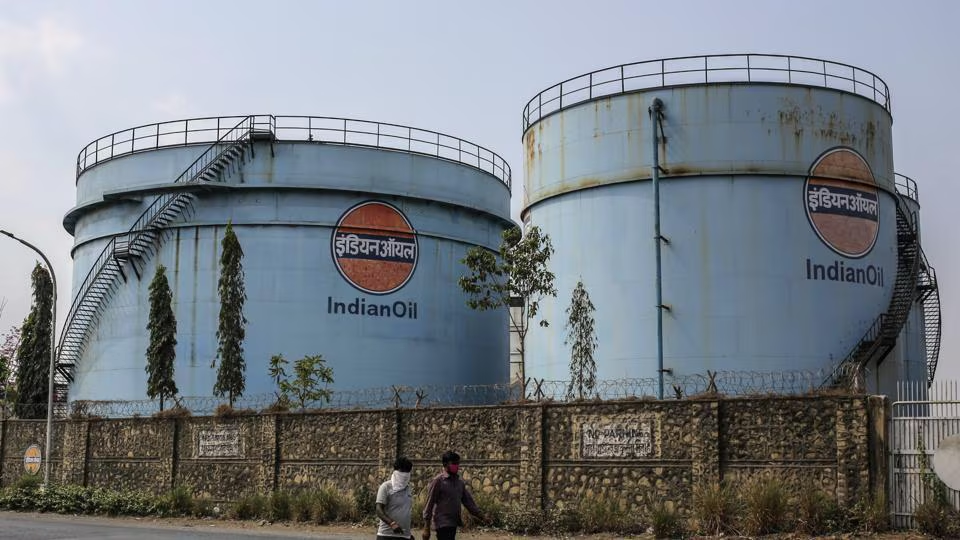
- Crude Oil & Fuel: India has 60 days of physical stocks available. This includes reserves held by oil companies and strategic underground caverns.
- LPG (Cooking Gas): One full month of supply is firmly arranged. Domestic production has been ramped up by 40%, now meeting over 60% of the daily requirement (50,000 Metric Tonnes).
- Future Supplies: Procurement for the next 60 days has already been tied up by state-run Oil Marketing Companies (OMCs).
“Nearly two months of steady supply is available for every Indian citizen regardless of what happens globally. India is completely secure for the next many months,” stated a MoPNG release.
Diplomatic Win: Safe Passage Through the Strait of Hormuz
A major reason for the global surge in oil prices (reaching $119 per barrel earlier this month) is the tension surrounding the Strait of Hormuz, a narrow waterway where 20% of global oil passes.
In a significant diplomatic development, Iran has officially granted India “Safe Passage” through the Strait. Iranian Foreign Minister Abbas Araghchi confirmed that India is among five “friendly nations”—including Russia, China, Pakistan, and Iraq—whose vessels are permitted to transit despite the regional maritime blockade. This ensures that Indian-flagged tankers like the Shivalik and Nanda Devi can continue bringing crude oil to Indian shores without disruption.
Private Vs Public Petrol Pumps: The Price Gap
On the same day, March 26, Nayara Energy, India’s largest private fuel retailer, increased prices at its nearly 7,000 petrol pumps. Petrol became costlier by up to ₹5 per litre and diesel by ₹3 per litre. This is the first major hike by a big retailer since the West Asia conflict started.
Nayara Energy is majority-owned by Russia’s Rosneft. Unlike state-owned companies, private retailers do not get government support to keep prices frozen when global crude costs rise. Sources said Nayara passed on part of the increase in input costs due to higher international oil prices. The exact rise can differ slightly from state to state because of local taxes like VAT. In some places petrol went up by ₹5.30.
State-owned oil marketing companies, which run about 90 per cent of the pumps, have so far kept regular petrol and diesel prices unchanged. They had earlier made small adjustments only in premium grades and industrial diesel. The government is watching the situation closely and has said it will protect common people and farmers from big burdens.
Many people on social media expressed concern after seeing the Nayara hike and asked if other pumps would follow. Officials have not announced any immediate change in public sector prices.
While the central government and state-run firms (IOCL, BPCL, HPCL) have kept petrol and diesel prices frozen to protect consumers, private retailers are feeling the heat of global crude costs.
- Nayara Energy Hike: India’s largest private fuel retailer, Nayara Energy (majority-owned by Rosneft), has increased its prices. Petrol has seen a hike of ₹5 per litre, while diesel has gone up by ₹3 per litre.
- Reason for Hike: Unlike state-owned firms, private retailers do not receive government subsidies to offset losses. With global crude hitting high notes, these firms have begun passing on costs to maintain operations.
- Public Pumps Status: State-run pumps, which control 90% of the market, continue to sell at the old rates, though they have increased prices for Premium Petrol (by ₹2) and Bulk Diesel for industrial use (by ₹22).
Switch to PNG: A Strategic Shift
The government is also accelerating the transition from LPG cylinders to Piped Natural Gas (PNG). A recent order suggests that in areas where PNG infrastructure is fully operational, household LPG supplies may eventually be discontinued to reduce the logistical burden on the energy grid. This is not a sign of shortage but a move toward long-term energy efficiency
FAQs
Q1: Is India going into another lockdown in March 2026?
Answer: No. The government has categorically denied any plans for a lockdown. The rumors originated from a misunderstanding of a speech by PM Modi where he asked for “COVID-like alertness” regarding the economy and energy, not a restriction on people.
Q2: Is there a real shortage of petrol or diesel in India?
Answer: No. India has enough stock for 60 days. Any long queues seen at pumps are due to “panic buying” caused by rumors, not an actual lack of fuel.
Q3: Why are prices higher at Nayara Energy petrol pumps?
Answer: Nayara is a private company. Since global crude prices have risen, they have hiked petrol by ₹5 and diesel by ₹3 to cover their costs. State-run pumps (Indian Oil, HPCL, BPCL) have not increased prices for regular fuel.
Q4: What is the situation at the Strait of Hormuz for Indian ships?
Answer: Iran has designated India as a “friendly nation” and is allowing Indian ships safe passage. This means our oil supply from the Middle East is currently secure.
Q5: Is it true that LPG supply will be stopped?
Answer: Only for those who have access to PNG (Piped Gas) and refuse to switch. For the rest of the country, there is a 30-day reserve of LPG, and supply is functioning normally.