


The Tragic Collision in Southern Spain
A sad event shook Spain on Sunday evening, January 18, 2026. Two fast trains crashed near the small town of Adamuz in Córdoba province. This is in the south of the country. The accident killed at least 24 people and hurt more than 200 others. It happened around 7:39 in the evening, local time. One train derailed and hit another coming from the opposite side. Rescue teams worked all night to help those trapped. Leaders in Spain shared their sorrow, and trains on that route stopped running. People are now asking why this happened on a track that was meant to be safe.
The first train was run by Iryo. It was going from Málaga, a city by the sea, to Madrid, the capital. This train, number 6189, was a new type called Frecciarossa 1000. It had about 300 people on board. Soon after leaving Córdoba station, it went off the tracks while crossing a switch. The back parts of the train jumped to the other track. At the same time, another train from Renfe was coming from Madrid to Huelva. This was train 2384, a Class 120 model, with around 184 passengers. The two trains hit hard. The Renfe train’s front cars fell down a 4-meter drop beside the tracks. The place was hard to reach, making it tough for helpers to get there.

This crash is one of the worst in Spain’s train history in recent years. The tracks are part of the Madrid-Seville high-speed line, which has been running since 1992. Trains on this line can go very fast, but the spot where it happened was a straight part. It was fixed up just last year, in May 2025. Officials say a lot of money, about 700 million euros, was spent to make it better. Still, something went wrong, and now experts are looking into it.
Casualties and the Human Toll
The number of dead is at least 24, but it might go up. Among those who died was the driver of the Renfe train from Madrid to Huelva. Many more got hurt – about 245 in total. Out of these, 75 went to hospitals, and 15 were in very bad shape. Some had small cuts and bruises, treated at the spot. Others needed quick help for broken bones or worse. The trains together had around 484 people, so many lives were touched by this.

Families waited in worry at stations like Atocha in Madrid, Santa Justa in Seville, and others in Córdoba, Málaga, and Huelva. Special places were set up there for them to get news. Doctors and nurses from nearby areas came fast. They set up tents to care for the hurt. Some people were still stuck in the wrecked cars hours after the crash. The dark night made things harder, but lights and tools helped the teams.
This accident reminds us how sudden bad things can happen. Passengers told stories of fear. One said the train shook hard, then everything flipped. Another talked about helping others climb out. The hurt included men, women, and kids on their way home or for work. Hospitals in Córdoba and around took in the cases. Leaders promised full help for those who lost loved ones or got injured.
Emergency Response on the Ground
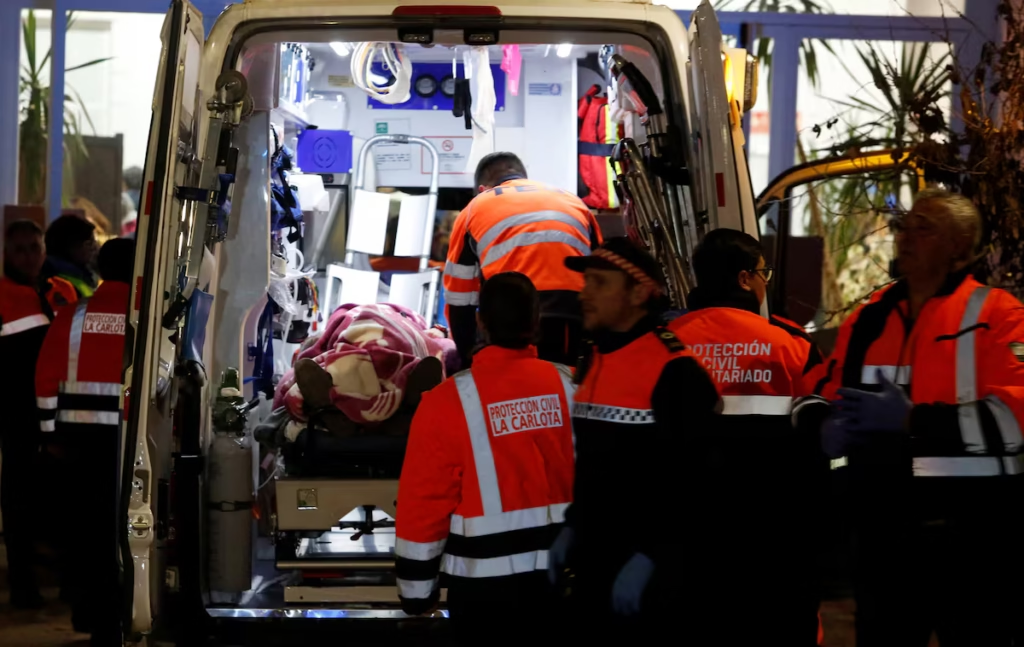
Help came quick after the crash. More than 300 people from fire, police, and health services rushed to Adamuz. The Spanish army sent 40 soldiers and 15 trucks from their emergency unit. They used big machines to lift the heavy train parts and reach those inside. Drones flew over to see the full picture. Mobile care units, like small hospitals on wheels, were there to treat people right away.
The area is rural, with fields around. This made it tricky to bring in help, but roads were cleared fast. Local people also stepped up. They brought blankets, water, and food for the survivors. By morning, most were out, but work went on to clear the tracks. The government said no one was left trapped by then, but checks continued.
Rail bosses at ADIF, who run the tracks, stopped all fast trains between Madrid and the south. This hit many travelers. Buses were used instead for some routes. Stations had signs and staff to guide people. The response showed how Spain handles big troubles, but it also raised questions about why the crash happened.
Spain’s King Felipe VI sent his deep sorrow to the families. He said the whole country stands with them. Prime Minister Pedro Sánchez called it a “night of deep pain” for Spain. He wrote on social media that the government is doing all it can to help. “We are working closely with emergency services to support the victims and their families,” he said.
The head of Andalusia region, Juanma Moreno, was at the site early. He told news people the death number might rise as they learn more. “This is a very sad day. Our thoughts are with those who suffered,” he added. Transport Minister Óscar Puente spoke too. He said the track was straight and just fixed last year with big money spent. “It was supposed to be in perfect condition,” he noted. The Iryo train was only four years old, almost new.

From Europe, Ursula von der Leyen, the Commission President, shared her sadness. “I am following the terrible news from Córdoba. My deepest condolences to the families and loved ones of the victims,” she posted online. These words show how the world felt the pain of this event.
Ongoing Investigation into the Cause
Experts are now trying to find out why the trains derailed. The spot was not a bend or hill, just a flat part. The switch where the Iryo train crossed might be key. Weather was normal, no rain or wind reported. Trains have safety systems to stop such things, but they failed here.
A team from the government and rail companies is looking at black boxes from the trains. These record speed, brakes, and more. They will check if there was a machine fault or human mistake. The track was checked after the 2025 fix, so that surprises many. No quick answer yet, but updates are coming.
In the past, Spain had a big crash in 2013 near Santiago de Compostela. That killed 79 people when a train went too fast on a curve. After that, safety got better with new tech. But this new accident makes people worry again. Is the system safe enough with more private trains like Iryo running?
Background on Spain’s High-Speed Rail Network
Spain has one of the best train systems in the world. Its high-speed lines are the second longest after China. The Madrid-Seville line started in 1992 for a big expo. It cut travel time from hours to minutes. Trains like AVE from Renfe go up to 300 km per hour. Iryo is a new player, started in 2019, owned mostly by an Italian company. They began runs in the south in 2023.
This network helps people move fast between cities. It boosts jobs and travel. But with speed comes risk. Rules are strict, with auto brakes and signals. Still, accidents can happen. Renfe is the state company, split from the old one in 2005. ADIF handles the tracks. Opening to private firms like Iryo brings more choices but needs good checks.
Similar Incidents and Lessons Learned
Train crashes are rare in Spain, but some stand out. The 2013 Santiago one was due to speed. The driver got jail time. Before that, in 2003, a crash killed 19. Each time, changes came – better training, tech upgrades. This Adamuz crash is the worst since 2013. It might lead to new rules, like more checks on switches or trains.
Around the world, high-speed crashes happen too. In China, one in 2011 killed 40. In Germany, 1998, over 100 died. Lessons from these help make trains safer. Spain will likely look at those to fix things here.
Impact on Travel and the Economy
The crash stopped trains between Madrid and Andalusia. This area has big cities like Seville, Málaga. Many use trains for work, holidays. Delays hit thousands. Airlines might see more flyers, but costs go up. The south relies on tourism, so this hurts hotels, shops.

Fixing the tracks will take time. Costs could be high. Insurance and help for families add more. But Spain’s rail is strong; it will bounce back. People might think twice about trains, but stats show they are safer than cars.
In the end, this tragedy calls for better care. Good tracks and trains need watchful eyes. As probes go on, hopes are for no more such sad days.
FAQs
What happened in the Spain train crash on January 18, 2026?
Two high-speed trains derailed and collided near Adamuz in Córdoba province. The Iryo train from Málaga to Madrid went off the tracks first, hitting the Renfe train from Madrid to Huelva. It was around 7:39 PM. The crash killed at least 24 and injured 245, with some still in danger.
How many people died and were injured?
At least 24 died, including one driver. About 245 got hurt, 75 went to hospitals, and 15 were critical. Numbers might change as more info comes.
What caused the train derailment?
The cause is not known yet. The track was straight and recently fixed. Experts are checking train records and the site. No weather issues reported.
What did Spanish leaders say about the accident?
Prime Minister Pedro Sánchez said it’s a “night of deep pain” and the government is helping. King Felipe VI offered condolences. Andalusia’s Juanma Moreno said the toll might rise and shared support. Transport Minister Óscar Puente noted the track was in good shape after recent work.
How did emergency services respond?
Over 300 helpers came, including army units. They used drones, machines, and mobile clinics. Locals helped too. All were rescued by morning, but clearing continued.
Is train travel in Spain safe after this?
Spain’s high-speed trains are among the safest. This is rare. Past crashes led to better safety. Probes will bring changes if needed.
What is the history of train accidents in Spain?
The worst recent was in 2013 at Santiago, killing 79 due to speed. Rules got tighter after. This is the biggest since then.
How has the crash affected rail services?
Trains between Madrid and south Spain stopped at least for January 19. Buses help some. Check ADIF for updates.