


Camp J, divided into cellblocks named Alligator, Barracuda, Gar, and Shark, was designed for extended solitary confinement, or “lockdown,” for inmates committing disciplinary infractions like fights.
In a controversial move that’s drawing sharp criticism from civil rights groups, human rights advocates, and legal experts, the Trump administration has repurposed a notorious unit at Louisiana’s Angola State Penitentiary, known as Camp J or “the dungeon”, into an Immigration and Customs Enforcement (ICE) detention center. Announced on September 3, during a joint press conference with Louisiana Governor Jeff Landry, Homeland Security Secretary Kristi Noem, Attorney General Pam Bondi, and ICE Deputy Director Madison Sheahan, the facility—now rebranded as “Camp 57” or “Louisiana Lockup”—aims to house over 400 undocumented immigrants accused of serious crimes as part of President Donald Trump’s aggressive deportation agenda.
The Shadowed Past of Angola Prison: A Plantation Turned Maximum-Security Nightmare
The Louisiana State Penitentiary, commonly called Angola, occupies 18,000 acres along the Mississippi River—larger than the island of Manhattan—and was originally four slave plantations in the 1830s, including one named after the African region from which many enslaved people originated. After the Civil War, it became a convict-leasing operation under Confederate Major Samuel James in 1880, where predominantly Black prisoners were forced into brutal labor under armed guards, echoing the plantation era. The state assumed control in 1901, but conditions remained horrific: Inmates toiled in fields for pennies, facing whippings and executions. By the 1930s and 1940s, exposés revealed rampant brutality, leading to a 1951 protest where over 50 inmates slashed their Achilles tendons in defiance.
Angola earned the moniker “the bloodiest prison in the South” due to ongoing violence, including the 1999 Camp D uprising that resulted in deaths. Today, it houses about 5,000 inmates, 74% Black, many serving life sentences without parole, in a system criticized for systemic racism, sexual abuse, and forced labor likened to modern slavery. A 2023 federal ruling labeled its medical care “abhorrent,” citing preventable deaths from neglect. This history of dehumanization sets the stage for understanding Camp J’s role within Angola’s oppressive framework.
What Is Camp J?
Established in 1976 as Angola’s most restrictive housing unit, Camp J, divided into cellblocks named Alligator, Barracuda, Gar, and Shark,was designed for extended solitary confinement, or “lockdown,” for inmates committing disciplinary infractions like fights. Inmates endured 23 hours a day in 6×9-foot cells, with only one hour for showers or escorted movement and limited yard access three times weekly. Constant fluorescent lighting, malfunctioning doors, and rampant weapons, 44 seized in early 2017 alone, fostered a toxic environment.

Mental health deteriorated rapidly; in April 2016, two suicides occurred on the same day, including Terrance Carter’s after his first infraction and denied care. Former inmate Ronald Marshall described it as “horrible,” with a “possessing spirit” enabling guard abuse. Criminal justice advocates called it a “microcosm of what’s wrong” with prisons, citing high suicide rates and isolation’s psychological toll.
Closed in May 2018 due to safety issues, deteriorating infrastructure, high staff turnover (85 officers lost yearly), and a national push against solitary via programs like Vera Institute’s Safe Alternatives to Segregation—Camp J reduced Angola’s lockdown population by 400. Proposals suggested repurposing it for elderly inmates, but Governor Landry’s July 2025 emergency declaration fast-tracked repairs under the guise of state overcrowding, funded by federal ICE allocations from Trump’s bill. This set the stage for its ICE transformation.
Trump’s Deportation Push: From Emergency Declaration to ‘Camp 57’ Activation
Since Trump’s January 2025 inauguration, his administration has prioritized mass deportations, targeting 1 million annually with ICE arrest quotas of 3,000 daily. Congress’s July 2025 “Big Beautiful Bill” allocated $150-170 billion for enforcement, tripling ICE’s budget and adding 80,000 beds via partnerships with red states. Similar facilities include Florida’s shuttered “Alligator Alcatraz,” Nebraska’s “Cornhusker Clink,” and Indiana’s “Speedway Slammer.
Landry’s declaration cited “violent offenders” overwhelming capacity, but it masked federal collaboration. On September 3, officials toured the refurbished site: stark cells with metal toilets, barred doors, and chain-link “dog kennel” enclosures, isolated from general population but retaining prison aesthetics. It targets “high-risk” migrants post-sentence, like those convicted of murder or trafficking; 51 transferred initially, with 200 more by mid-September, expanding to 400+ men. Noem praised Angola’s “legendary” deterrence, while Bondi hailed Louisiana as a model for rapid deportations without “catch-and-release.”
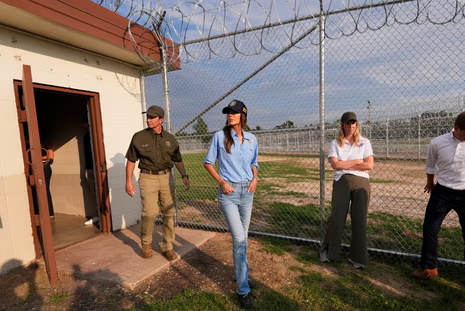
Louisiana, already second to Texas in ICE centers, saw 1,989 arrests from January to June 2025, per Deportation Data Project analysis. Over half of detainees were transferred multiple times, exceeding prior administrations. This repurposing blurs civil immigration detention—where individuals await deportation—with criminal punishment, raising due process concerns.
Why the Backlash? Critics Slam Revival of Brutality in Immigration Enforcement
Condemnation has been swift and multifaceted, rooted in Camp J’s history and the policy’s implications. ACLU National Prison Project attorney Eunice Cho called it “another example of the Trump administration’s attempt to use facilities… associated with histories of abuse and deprivation.” ACLU of Louisiana’s Nora Ahmed decried the “deeply problematic” imagery of Angola’s plantation roots, associating immigrants with criminals despite lower undocumented crime rates, and blurring rights distinctions.
Marshall warned detainees can’t appeal to feds creating the conditions, predicting abuse in a site of proven neglect. Amnesty International, Southern Poverty Law Center, and others filed lawsuits citing Eighth Amendment violations and medical risks, referencing Angola’s 2023 ruling. Broader critiques highlight privatization of abusive sites, exacerbating Louisiana’s incarceration crisis, highest U.S. rate pre-Landry’s tough policies abolishing parole.
This echoes national outcries over other sites, like Fort Bliss’s former Japanese internment camp, condemned by ACLU and descendants for militarized cruelty. Protests in New Orleans and op-eds amplify calls for oversight, with experts warning of constitutional challenges.
FAQs About Camp J
1. Historical Role?
Built 1976 for solitary; closed 2018 for safety; housed 400 in isolation, linked to suicides and violence.
2. Reopening Details?
Emergency order July 2025; 51 detainees September 3, capacity 400+ men; features cells and enclosures criticized as inhumane.
3. Target Population?
Post-sentence migrants with convictions (e.g., murder, assault); part of 1M deportation goal.