


The United States has given India a short-term break to buy Russian oil that is stuck at sea. This move comes as tensions in the Middle East, especially with Iran, are messing up global oil supplies. On March 5, 2026, US Treasury Secretary Scott Bessent announced this 30-day waiver. It lets Indian oil refiners purchase Russian crude loaded on ships before that date. The goal is to keep oil flowing in the world market without helping Russia too much financially. This decision has sparked talks in India about energy needs and ties with the US. Many see it as a way to ease pressure from rising oil prices due to the Strait of Hormuz being blocked.
India has been buying cheap Russian oil since 2022, after the Ukraine war started. This has saved money but also drawn criticism from the West. The waiver ends on April 4, 2026, at 12:01 a.m. Washington time. It only covers oil already on tankers, not new loads. Bessent said this is a quick fix to handle supply issues caused by Iran’s actions in key shipping routes. He called India an important partner and expects New Delhi to buy more US oil soon.
The Strait of Hormuz is a narrow waterway between Iran and Oman. It carries about one-fifth of the world’s oil. Since the US-Israel strikes on Iran began, shipping there has almost stopped. Tankers are damaged or waiting, leading to fears of higher fuel prices everywhere. India, which imports most of its oil, feels this pinch. The waiver helps avoid a sudden shortage.
Background on the Waiver
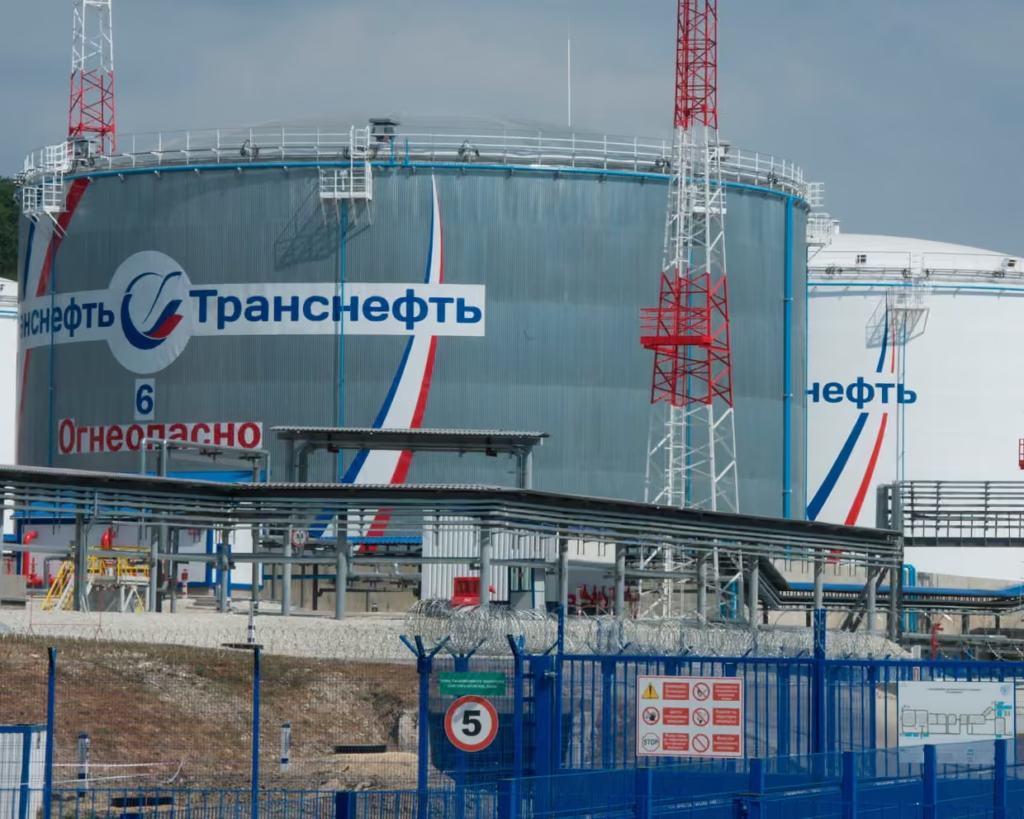
The US Treasury’s Office of Foreign Assets Control (OFAC) issued General License 133 for this waiver. It allows deals with Russian crude and products loaded before March 5, 2026, as long as they reach India. This came after reports of 9.5 million barrels of Russian oil floating in Asian waters last week. These ships were stranded because of tighter US sanctions and the Iran conflict.
Bessent posted on X: “To enable oil to keep flowing into the global market, the Treasury Department is issuing a temporary 30-day waiver to allow Indian refiners to purchase Russian oil.” He added that it won’t give big money to Russia since it’s only for oil already at sea. This is part of the US plan to control Russia’s earnings from oil while keeping supplies steady.
India’s oil imports from Russia have been over 1 million barrels per day lately. In January 2026, it was about 1.1 million bpd, the lowest since late 2022. But overall, since 2022, India has bought Russian oil worth billions, helping both countries. The waiver covers these stuck shipments, giving relief to Indian firms like Reliance Industries and Indian Oil Corporation.
Reasons Behind the Decision
The main reason is the chaos in West Asia. The US-Iran war has blocked the Strait of Hormuz, a key path for oil tankers. About 150 ships are stuck, including oil and gas carriers. This has cut global oil flow by 20%, pushing prices up. Brent crude is now near $87 per barrel.
Iran’s moves have made shipping risky. Insurers are pulling war risk covers, leaving vessels idle. For India, this means higher costs for fuel and goods. The US waiver helps by letting India take the cheap Russian oil that’s already out there.
Bessent linked this to US oil strength under Trump. US production is at a record 13.6 million barrels per day. He said: “India is an essential partner of the United States, and we fully anticipate that New Delhi will ramp up purchases of U.S. oil.” This shows the US wants India to shift from Russian to American oil long-term.

The decision also aims to fight inflation in the US and elsewhere. With oil prices jumping 15% last week, the waiver eases some pressure. It’s a stop-gap to avoid bigger disruptions.
Impact on Global Oil Supply
The Iran conflict has changed shipping worldwide. Ships are now going around Africa, adding time and cost. This affects not just oil but also containers and air freight. Ports in Europe and Asia might see backups.
For oil, the Strait handles 20.3 million barrels daily and 290 million cubic meters of LNG. 80% of LNG goes to Asia, 20% to Europe. The blockage could lead to shortages in South Asia and higher food prices if fertilizers (made from oil) get expensive.
India’s waiver helps keep some supply coming. But if the war drags on, prices could stay high. Oil slipped a bit after the announcement, showing some relief. Still, experts say longer disruptions mean trouble for economies like India’s, which rely on imports.
India’s Reliance on Russian Oil
Since Russia’s Ukraine invasion in 2022, India has become a big buyer of discounted Russian crude. Imports hit over 1.5 million bpd at times, worth $168 billion total. This made Russia India’s top supplier, ahead of Iraq and Saudi Arabia.
Cheap oil helped India save on bills and keep fuel prices down. But US sanctions made it hard. Trump imposed 25% tariffs on Indian goods for buying Russian oil. Indian refiners like HPCL and BPCL halted new deals last year.
Now, with the waiver, they can take the stranded oil. This covers short-term needs. India has 74 days of reserves and big refining capacity. But long-term, diversifying sources is key. The government says it won’t raise CNG or PNG prices despite curbs on some users.

US Expectations and Oil Production
The US wants India to buy more American oil. Production hit 13.6 million bpd in 2025, a world record. It rose from 13.2 million in 2024. Trump policies boosted drilling on federal lands.
Bessent said the waiver is short-term, and India should switch to US supplies. This could strengthen US-India ties but raise questions about India’s choices.
US output might drop slightly to 13.5 million bpd in 2026. But it’s still high, giving leverage in talks.
Political Reactions in India
The waiver has caused a stir in Indian politics. Opposition leaders say it’s a hit to India’s freedom. Rahul Gandhi called it “not policy but exploitation of a compromised individual.” He recalled his February speech warning about US influence on oil buys.
Congress president Mallikarjun Kharge said the US “allowing” India is an insult. Jairam Ramesh called it “American blackmail.” Arvind Kejriwal asked, “Who is America to grant permission?”
The BJP hit back, calling it a win for PM Modi’s diplomacy. They said it’s a waiver on tariffs, not a ban, and India decides. Praveen Khandelwal accused opposition of not trusting the government.

This debate shows worries about sovereignty vs. practical needs.
Expert Opinions and Quotes
Experts say the waiver is needed but temporary. Peter Sand from Xeneta warned of more trade weaponization. Jeremy Nixon from ONE said cargo might pile up.
An Indian official said: “US is worried about inflation.” This shows shared concerns.
Bessent: “This stop-gap measure will alleviate pressure caused by Iran’s attempt to take global energy hostage.”
Rahul Gandhi: “What we are witnessing today is not policy. It is the result of the exploitation of a compromised individual.”

These views highlight the mix of economics and politics.
FAQs
What is the US waiver for Russian oil to India?
The US issued a 30-day license allowing Indian refiners to buy Russian oil loaded before March 5, 2026. It’s for stranded cargoes due to sanctions and Iran issues. It expires on April 4, 2026. This helps keep oil supplies steady without big gains for Russia.
Why did the US grant this waiver?
Mainly because of disruptions in the Strait of Hormuz from the Iran war. Shipping is halted, causing supply fears and higher prices. The US wants to avoid global shortages while pushing India to buy American oil later. US Treasury Secretary Bessent said it’s a short-term fix to let oil flow.
How much Russian oil does India import?
Since 2022, India has imported over 1 million bpd on average, sometimes up to 1.5 million. In January 2026, it was 1.1 million bpd. Total value since the Ukraine war is about $168 billion. Russia is India’s top supplier, thanks to discounts.
What are the political reactions in India?
Opposition parties like Congress say it’s a blow to sovereignty, asking why India needs US permission. Rahul Gandhi called it exploitation. BJP says it’s a diplomacy win and only waives tariffs, not controls buys. This has led to heated debates in Parliament and media.
Will this affect fuel prices in India?
Possibly not right away, as the waiver brings in cheap oil. But if the Iran conflict lasts, global prices could rise, affecting India. The government has reserves and says no price hikes for now on CNG and PNG.
What does this mean for US-India relations?
It shows cooperation on energy but also US pressure. The US expects more buys of its record 13.6 million bpd oil. India wants to keep options open for cheap sources. This could strengthen ties if India shifts some imports.