


The world woke up to a bigger mess in the Middle East on March 4, 2026. Iran has hit back hard after the US and Israel launched big attacks on its land. Reports say Iran has targeted 11 countries, including places like Cyprus and Lebanon, which are friends of the US and Israel. This fight started when the US and Israel bombed Iran on February 28, killing their top leader, Ali Khamenei. Now, Iran is fighting back by attacking US bases and oil spots in the Gulf. They have also closed the Strait of Hormuz, a narrow sea path where a lot of the world’s oil passes through. Because of this, oil prices have jumped up fast, making everyone worry about higher costs for petrol and gas. This is not just a local fight anymore; it’s spreading and could hurt economies around the world, including India, which buys a lot of oil from this area.
Things got bad quickly. On March 1, Iran started shooting missiles and drones at Israel, US army spots in the Gulf, and even some European places. Cyprus, which has a British army base, was hit for the first time, making this the first time Europe got pulled into the fight directly. Lebanon saw more action too, with Israel bombing Hezbollah groups there, and Iran helping them fight back. Other countries like Saudi Arabia, UAE, Qatar, Bahrain, Kuwait, Jordan, Iraq, Oman, and Syria have all reported hits. That’s 11 countries in total, as per news from ABC News and other big outlets. Iran’s army, the Revolutionary Guards, said they are doing this to make the US and Israel pay for killing their leader and bombing their nuclear sites.
President Donald Trump of the US has said they will keep fighting. In a speech on March 3, he told reporters, “We will easily win this. Iran is weak now without their leader.” But Iran is not backing down. Their new leaders have warned that no ship can go through the Strait of Hormuz. This strait is like a door for oil from the Gulf to the rest of the world. About 20% of all oil used globally goes through there every day. When Iran closed it, ships stopped moving, and oil prices went up by more than 10% in just a few days. Brent crude, which is a main type of oil, hit $82 per barrel, the highest in months.
How the Conflict Started and Spread
This all began with rising anger between Iran, the US, and Israel. For years, Iran has been making nuclear things, and the US and Israel did not like it. On February 28, 2026, they started “Operation Epic Fury,” a big air attack on Iran’s army bases, nuclear plants, and leaders. They killed Supreme Leader Ali Khamenei, which shocked everyone in Iran. Iran called it a big crime and promised to fight back hard.

By March 1, Iran launched over 400 missiles and 1,000 drones. They hit Israel first, killing some people near Jerusalem. Then, they targeted US bases in Bahrain, Kuwait, and other Gulf places. Civilian spots got hit too, like Dubai’s airport and a hotel in Bahrain. Oman’s port at Duqm was attacked by drones, and even a British base in Cyprus felt the heat. Lebanon joined in because Hezbollah, who gets help from Iran, started fighting Israel more. Israel sent troops into south Lebanon, saying they need to stop the threat.
French President Emmanuel Macron warned Israel not to go too far into Lebanon. He said on March 3, “This could make things worse for everyone.” Protests broke out in Paris against the war after Iran hit some targets there, but it was small. In the Gulf, Saudi Arabia shut its biggest oil refinery after a drone hit it. Qatar stopped making liquefied natural gas, which is used for cooking and power. This means less gas for countries like India, which buys from Qatar.
Iran’s plan seems to be to hurt the friends of US and Israel. By hitting oil places and closing the strait, they want to make life hard for those countries. A expert from CSIS, a think tank in the US, said, “Iran is trying to push the Gulf states to tell the US to stop.” If the fight goes on, it could mean no oil from the area for weeks, hurting the world economy.
The Closure of Strait of Hormuz: A Big Blow to Oil Supply
The Strait of Hormuz is a small sea path between Iran and Oman. It’s only 21 miles wide at some points, but it’s super important. Every day, about 20 million barrels of oil go through it from countries like Saudi Arabia, Iraq, and UAE. That’s one-fifth of all oil the world uses. Iran also sends some of its oil through there.

On March 2, Iran’s General Ebrahim Jabbari said, “No ship will pass, and not a drop of oil will leave.” They attacked some tankers to show they mean it. One ship, the Athe Nova, caught fire after drones hit it. Another, Stena Imperative, which helps US navy ships, was hit in Bahrain. At least three tankers were damaged, and crews had to leave one ship near Oman.
Now, over 150 ships are waiting outside the strait, scared to go in. Shipping companies like Maersk have stopped sending ships that way. This has made oil prices go up fast. On March 3, oil jumped 9% to $79.70 a barrel. Gas prices are also rising because Qatar can’t send LNG. If this lasts, experts say oil could hit $100 per barrel, making petrol cost more in India and other places.
US President Trump said the navy might help escort ships through the strait. He also offered insurance for ships to make them feel safe. But Iran warned they will attack any ship that tries. This is different from past fights, where Iran did not close the strait fully. Now, with their leader dead, they are more angry and ready to take big risks.
Impact on Global Economy and India
This war is bad news for the world. Stock markets fell in the US, Europe, and Asia because of the oil shock. In India, the Sensex dropped sharply on March 4 due to fears of higher oil costs. India gets about 80% of its oil from abroad, much from the Gulf. If prices stay high, it could mean more money for imports, higher inflation, and costlier fuel for cars and trucks.
Air travel is messed up too. Airports in Dubai, Abu Dhabi, and Doha are damaged or closed. Thousands of flights are canceled, stranding people. Indian airlines like IndiGo and Air India are running special flights to bring people back from the Gulf, but it’s tough because airspace is closed in many places.
An analyst from American Action Forum said, “This closure could lead to recession if it goes on.” For India, it means looking for oil from other places like Russia or the US, but that costs more. The government might have to use its oil reserves to keep prices down.
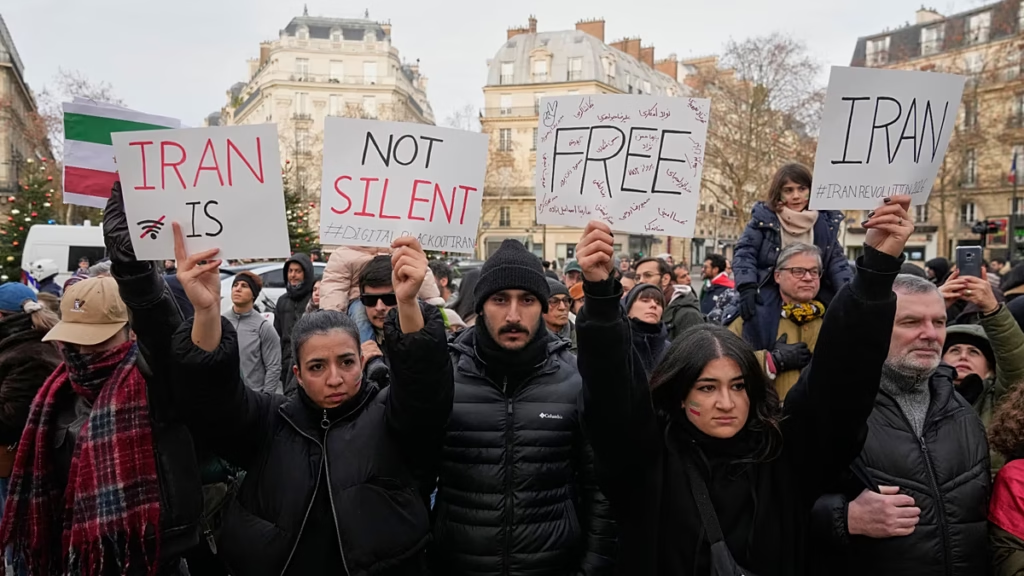
In the Middle East, people are suffering. In Bahrain, an apartment building was hit, and in Dubai, a shopping area. Many are scared, and some countries are helping their citizens leave. France is evacuating its people, and the US is using army planes to get Americans out after attacks on embassies.
What Leaders and Experts Are Saying
Leaders are talking tough. Iran’s foreign minister said on March 3, “We will defend our land and make our enemies pay.” Israel’s PM said they will keep striking until the threat is gone. Trump called Iran “terrible” and said the US is strong.
Experts worry about more spread. A report from Critical Threats said Iran wants to hurt Gulf states so they pressure the US to stop. Another from Atlas Institute said Asian countries like India are most hurt because they need Gulf oil.
Mehbooba Mufti, a leader from India, said India’s silence on the attacks is strange, since Iran helped India before. An Iranian diplomat in India said the US does not want India to grow strong. From X posts, people are worried about oil prices and the war growing.
Possible Future and Calls for Peace
If this fight does not stop soon, it could get worse. Iran might block the strait for longer, or use more weapons. The US and Israel say they want to end Iran’s nuclear plans, but Iran says they are safe. Many countries like China and Russia are calling for talks. The UN might meet to discuss peace.
For now, the world watches as oil prices climb and people in the Middle East face danger. This conflict shows how one area’s fight can affect everyone.
FAQs on Iran’s Retaliation and the Middle East Conflict
1. Which countries did Iran attack in retaliation?
Iran targeted 11 countries: Israel, Bahrain, UAE, Qatar, Kuwait, Saudi Arabia, Jordan, Iraq, Oman, Cyprus, and Lebanon (through support to Hezbollah). Hits included US bases, airports, oil facilities, and civilian areas. This was in response to US-Israel strikes on Iran starting February 28, 2026. Sources like ABC News and CSIS confirm the list, with Cyprus being the first European hit due to a British base.
2. Why did Iran close the Strait of Hormuz?
Iran closed it to hurt US and Israel allies by stopping oil flow. The strait carries 20% of global oil. They attacked tankers to warn ships away. IRGC’s General Jabbari said no ship passes. This caused 150+ ships to wait, per Reuters and Guardian reports.
3. How much have oil prices increased?
Oil jumped 10-13% to $80-82 per barrel by March 3. Brent crude hit $82, highest since 2025. Gas prices rose too due to Qatar shutdown. If prolonged, could reach $100, affecting India with higher fuel costs.
4. What is the impact on India?
India imports 80% oil from Gulf. Prices up mean costlier petrol, inflation. Flights to Gulf disrupted; special evacuations ongoing. Stock market fell. Government may use reserves.
5. Will the conflict end soon?
Hard to say. US says strikes continue; Iran vows more retaliation. Calls for peace from UN, but escalation risks high.