


New Delhi – The government has given a new name to the upcoming building for the Prime Minister’s Office (PMO). It will now be called ‘Seva Teerth’. This comes as the building is almost ready under the big Central Vista Redevelopment Project. Officials say the name shows a change in how the country thinks about running the government. It’s moving from just holding power to really serving the people.
The old name was ‘Executive Enclave’. But now, ‘Seva Teerth’ means a place of service, like a holy spot for duty. The PMO will move here from its current spot in South Block, which is 78 years old. This new spot will also have offices for the Cabinet Secretariat, National Security Council Secretariat, and India House for talks with leaders from other countries. All this is part of making government work smoother by putting key offices close together.
This news fits with other changes. For example, the road from Rashtrapati Bhavan to India Gate is now Kartavya Path, meaning the path of duty. The Prime Minister’s house is called Lok Kalyan Marg since 2016, which means the street of people’s welfare. And now, governors’ houses across states are getting renamed from Raj Bhawan to Lok Bhawan, to make them feel more like places for the people, not kings.
One official said: “This is not just about changing names. It’s about changing hearts. Government buildings should remind everyone that power comes from service, not the other way around.” Another added: “Seva Teerth is where big decisions for the nation will happen, but always with the people in mind.”
What is the Central Vista Project? A Quick Look Back
To understand this, we need to go back to 2019. That’s when Prime Minister Narendra Modi announced the Central Vista Redevelopment Project. The goal was simple: fix up the heart of Delhi’s government area. This stretch of about 3 kilometers from Rashtrapati Bhavan to India Gate was built by the British in the 1930s. It’s full of grand buildings like North Block and South Block, but they are old and crowded.
The project costs around Rs 20,000 crore. It includes many parts. First, a new Parliament building, which is already done and in use. It has space for more MPs as India’s population grows. Then, the Vice President’s house, also finished. The road, now Kartavya Path, was redone in 2022 with gardens, lights, and paths for walkers. No more cars zooming through—it’s for people now.
The big part is 10 new office buildings called the Common Central Secretariat (CCS). These will hold 51 ministries that are spread out now in old, leaky places like Udyog Bhawan or Shastri Bhawan. Three of these CCS buildings are almost ready. One, called Kartavya Bhavan, opened in August 2025. It houses big ministries like Home Affairs and External Affairs. They moved from North Block after 90 years!
The Seva Teerth complex is the Executive Enclave. It’s three buildings: Seva Teerth-1 for PMO, Seva Teerth-2 for Cabinet Secretariat, and Seva Teerth-3 for National Security Council. It’s right behind South Block, next to Vayu Bhawan. Work started after moving some old huts. Now, it’s in the last stages. Officials say it will be ready soon, maybe by early 2026. The whole project should wrap up by 2026-2027.
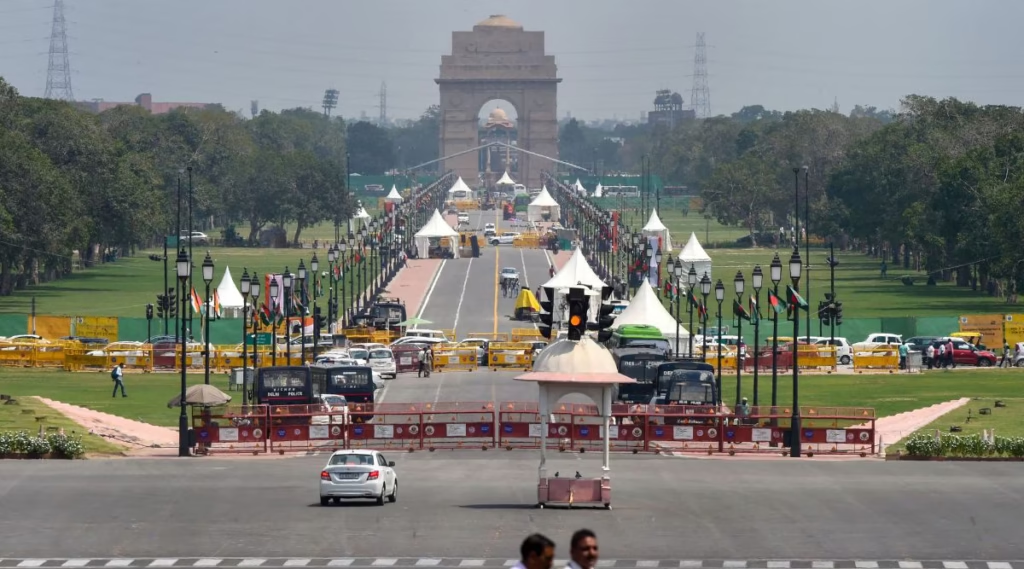
Why do this? Old buildings waste energy and space. New ones will save 30% power with green designs. They connect underground with tunnels and shuttles, so officials don’t waste time in traffic. Plus, North and South Blocks will become museums. One will be the world’s biggest—Yuga Yugeen Bharat National Museum—open to all Indians.
But it’s not all smooth. The project faced court cases from groups saying it’s too costly or hurts heritage. Some wanted to stop it during COVID. The government says it’s worth it for a modern India.
Why ‘Seva Teerth’? The Real Meaning Behind the Name
‘Seva’ means service in Hindi. ‘Teerth’ means a pilgrimage spot, like a sacred river bank where people go for peace and duty. So, Seva Teerth is like a temple of service. Officials say it’s to show that government is not about bosses sitting high up. It’s about helping common people—farmers, workers, students.
This fits Prime Minister Modi’s style. He often talks about ‘Sabka Saath, Sabka Vikas’—with all, for all. Since 2014, many changes point to this. Race Course Road became Lok Kalyan Marg. Now, Raj Bhavans are Lok Bhavans in states like Chhattisgarh and others. The idea? Make leaders feel close to the ‘lok’ or people.
A senior bureaucrat shared: “In the old days, names like ‘Raj’ made it feel like a kingdom. Now, it’s ‘lok’ and ‘seva’—for the people, by the people. This building will be where policies for jobs, health, and farms are made, always thinking of the last person in line.”
Experts agree. Political analyst Yogendra Yadav said: “Names matter in India. They carry culture. Calling it Seva Teerth is smart—it ties back to our traditions of selfless work, like in the Gita or Gandhi’s ideas.” But he added: “The real test is if this service reaches villages, not just Delhi offices.”
Inside Seva Teerth: What Will It Look Like and Do?
Picture this: A modern building with clean lines, big windows for light, and green roofs. Seva Teerth-1, for the PMO, has smart tech—AI for files, video calls with states, secure rooms for secrets. It’s energy-smart with solar panels and rain water harvesting. No more dusty files; everything digital.
The three buildings connect easily. India House next door will host world leaders—like when PM Modi meets US or Japan heads. No need to shuttle around Delhi. This saves time and money. One report says it could cut travel costs by 40% for top meetings.
For workers, it’s better too. Air-conditioned halls, gyms, canteens—things old blocks lack. About 500 staff will move here first. Training on new systems starts soon.
But what about jobs? The project created thousands of construction roles. Now, it means more tech jobs for running the buildings. Local people in Delhi say it’s good for economy.
The Bigger Change: How Governance is Shifting in India
This rename is part of a wave. Under Modi, government talks more about duty. Schemes like PM Awas Yojana or Ujjwala give direct help to poor. Digital India makes services online—no bribes.
Seva Teerth fits this. Officials say: “It’s a mindset shift. From ‘sarkar ki marzi’ (government’s wish) to ‘janata ki zaroorat’ (people’s need).” The Central Secretariat as Kartavya Bhavan already has open spaces for ideas.
States are copying. Chhattisgarh renamed its Raj Bhavan to Lok Bhavan last month. Others like Uttar Pradesh and Madhya Pradesh are next. This makes governors seem like helpers, not rulers.
But critics ask: Is it just names? Activist Ravi Shankar said: “Good symbols, but fix roads and schools first. Rs 20,000 crore could build 10,000 schools.” The government replies: “This is long-term. Better offices mean faster decisions for all.”
Challenges and What’s Next for the Project
Delays happened. COVID pushed back work. Courts asked for green checks. Now, CCS buildings 1-3 ready by May 2026, CCS-10 by April. Full project by 2027.
Cost? Started at Rs 13,450 crore, now Rs 20,000. But officials say value is high—saves Rs 1,000 crore yearly in energy and space.
Public view? Polls show 60% support, especially youth who want modern India. But opposition calls it “vanity project.” Congress leader Jairam Ramesh tweeted: “Rename all you want, but deliver jobs.”
Next steps: PMO move in early 2026. Then, more CCS opens. By 2027, museums ready. Underground metro loop will connect all.
Voices from Around: What People Are Saying
- Prime Minister Narendra Modi (from a recent speech): “Government is not about thrones, but about service. Every building we build must echo this—seva for 140 crore Indians.”
- Official from Housing Ministry: “Seva Teerth is more than bricks. It’s a promise: power serves, it doesn’t rule.”
- Architect B.V. Doshi (in an old interview): “Our buildings should heal and unite, not divide. This project can do that if it stays true to roots.”
- Urban Planner Shirish Patel: “Smart, green designs like this are future-proof. But involve locals more for real buy-in.”
- Common Citizen, Delhi Shopkeeper Rajesh Kumar: “Good if it means faster file work. My loan took months last year—hope Seva Teerth fixes that.”
- Opposition MP Asaduddin Owaisi: “Names change easy, but colonial mindset? That’s harder. Spend on health, not fancy homes.”
FAQs: Simple Answers to Common Questions
Q1: What does ‘Seva Teerth’ mean, and why this name for the PMO building?
‘Seva’ means service, and ‘Teerth’ means a sacred place like a river for pilgrimage. Together, it means a holy spot for public service. Officials chose it to show government should focus on helping people, not just holding power. It’s a shift from old colonial names to Indian values of duty.
Q2: When will the PMO move to Seva Teerth, and what’s inside the complex?
The building is almost done, so move could happen by early 2026. It has three parts: Seva Teerth-1 for PMO, -2 for Cabinet Secretariat, and -3 for National Security. Plus India House for foreign meets. All connected, with green tech to save energy.
Q3: How does this fit into the full Central Vista Project?
Central Vista is a big redo of Delhi’s government area, started in 2019. It includes new Parliament (done), Kartavya Path (done), 10 CCS offices (3 almost ready), and museums in old blocks. Seva Teerth is the Executive Enclave part. Whole thing aims to finish by 2027, costing Rs 20,000 crore.
Q4: Has the project faced any problems or delays?
Yes, COVID caused delays. Courts checked for green rules and heritage. Costs went up from Rs 13,000 crore. Some groups protested, saying money should go to poor. But government says it’s for better work and saving long-term costs.
Q5: What other names have changed, and why?
Many! Rajpath to Kartavya Path (duty path). PM house to Lok Kalyan Marg (people’s welfare street). Raj Bhavans to Lok Bhavans (people’s houses). Central Secretariat to Kartavya Bhavan (duty house). All to drop ‘raj’ (kingly) feel and add ‘lok’ (people) and ‘seva’ (service).
Q6: Will this really change how government works for common people?
It could, with faster offices and digital tools. But experts say real change needs better training and less red tape. Schemes like direct bank transfers already help. Watch if Seva Teerth speeds up things like passports or pensions.
Q7: Where can I learn more or visit?
Check the official Central Vista site for plans. Once museums open in 2027, anyone can visit North/South Blocks. For now, walk Kartavya Path—it’s open to public.